
Tuesday, August 9, 2022


NU
ADS
mk-logo
COLUMNS
MP SPEAKS | Smoking end game: Govt intervening, personal consent

MP SPEAKS | Most policies ratified under the World Health Organization Framework Convention on Tobacco Control (WHO FCTC) relate to regulatory control to reduce tobacco use.

In recent years, there is a shift from the reduction of tobacco use to proposals for the eradication of tobacco use for a smoke-free world (Tobacco End Game).

Among the more radical proposals was one from Singapore - ‘the Tobacco Free Generation 2000’ that would deny tobacco supply to any citizen born on or after a certain date (in that case Jan 1, 2000) (the Generation End Game).

Since then, Singapore, Tasmania (Australia), Guernsey (UK), Finland, New Zealand, and now Malaysia have proposed Generation End Game laws.

On Aug 2, Parliament debated DR 29/2022, Control of Tobacco Product and Smoking Bill 2022, commonly referred to as the Generation End Game Bill (the GEG Bill).

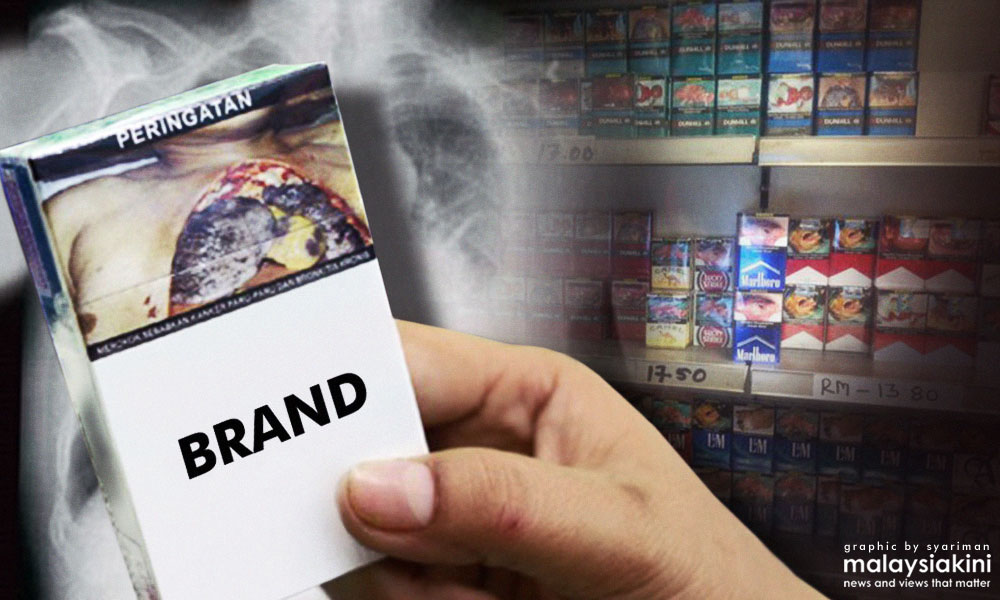
The GEG Bill proposes the criminalisation of buying, using, and possessing tobacco products for those born on Jan 1, 2007, and after (the 2007 Generation).

The criminal prohibition applies not only during their teens but continues into their adulthood and to the day they die even if they live to be a hundred. For this generation, the choice to smoke or to quit the habit is abrogated permanently.

The GEG Bill is not only about the criminalisation of tobacco use but also about the infantilisation of adults of this 2007 Generation.

ADS

The government treats them as incapable of making rational decisions to look after their own health, thus the government, like a good parent, makes the decision for them. Fair-minded people will find this absurd and unacceptable.

On the other hand, those born one day earlier, Dec 31, 2006, and before (the 2006 Generation) can buy, use, possess, and smoke to their hearts’ content until their dying day without restrictions, penalties, or molestation.
They retain their moral autonomy to smoke or quit the habit.

Since there is no valid reason for the different treatment of the two generations, this is arbitrary age discrimination.

Means as important as ends

I do not smoke. I do not want my children or their generation to smoke.

I also want a smoke-free world. However, for me, the means are as important as the ends. Freedom from state harassment is equally valued as public health.

If the use of the state’s coercive powers to prohibit a generation from smoking cannot be justified, the fall-out will set back public acceptance of more practical and less radical Tobacco End Game strategies.

ADS

Health Minister Khairy Jamaluddin’s rallying cry for the GEG Bill is “Let’s save some lives.” This must be weighed against the harsh reality that the GEG Bill is taking away their liberty and their freedom to choose.

They are subjected to a lifetime of living in fear of prosecution, state harassment in being stopped and searched, extortion, loss of privacy, and the stigma of a criminal record for smoking.

Their lives may be saved but are they any longer lives worth living? Is it acceptable for those in this 2007 Generation, who do not even smoke, to be subjected to the same risk of harassment as those who do?

Who made MPs “Gods” with powers to condemn a whole generation to a lifetime of misery and fear?

For the reasons stated in this article, I welcome the GEG Bill being referred to the Parliament Select Committee (PSC) for review.

It is hoped that the PSC can rework the GEG Bill to meet the threshold requirements for justifiable paternalism or else consider alternative Tobacco End Game strategies.

Paternalism

The idea that governments may use their coercive powers to change the personal behaviour of individuals without their consent is called paternalism.

Paternalism offends a fundamental principle of a democratic society – the individual is the best judge of his or her own personal behaviour.

The individual must be able to exercise his or her freedom of choice to cultivate and develop moral autonomy.

When the government intervenes in people’s lives, taking away their ability to make their own choices, it undermines their ability to learn from their mistakes, to develop as morally responsible citizens, and acquire the ability to responsibly manage risks.

It inevitably leads to dependence on government and diminishes self-reliance.

The Harm Principle

The only exception to the principle of freedom of choice for allowing paternalistic policies is to prevent harm to other people. This is John Stuart Mill’s “harm principle” enunciated in his treatise “On Liberty.”

According to him, when people are considered incompetent or incapable of making decisions in their own interest, the harm principle permits paternalistic intervention.

For many scholars and philosophers, the harm principle is the only legitimate ground for paternalistic intervention by the state.
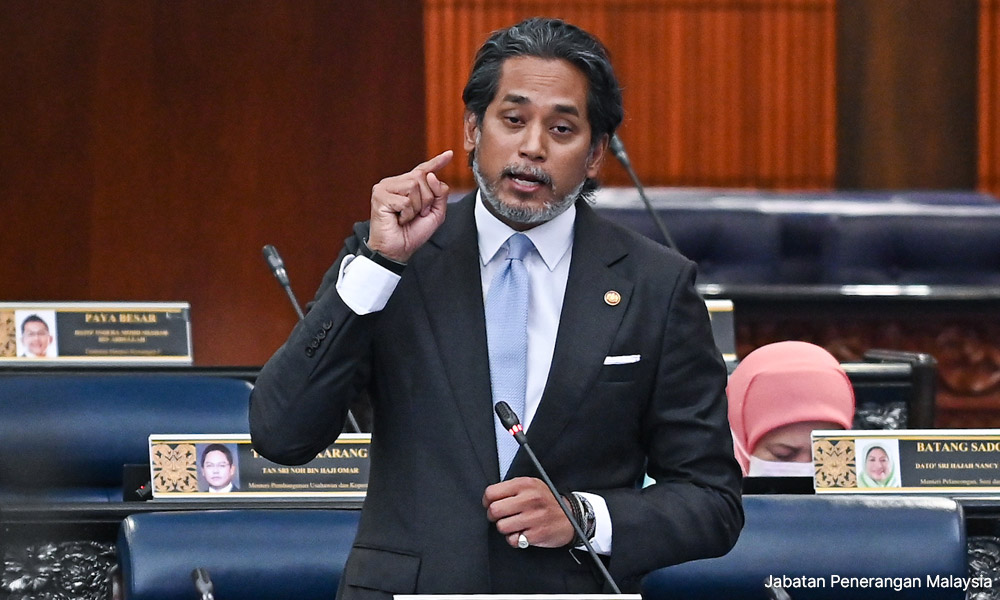
Health Minister Khairy Jamaluddin

Khairy contends that the harm principle is satisfied. In response to his first contention on the harm to third parties by second-hand smoke, this is addressed by confining smoking to restricted areas.

His second contention regarding the protection of the 2007 Generation from self-harm is tenuous.

The minister argues that the 2007 Generation is incapable of making a rational decision to stop smoking. He based this argument on the addictive nature of nicotine. This argument is not convincing for the following reasons:

  • Nicotine addiction affects only those who smoke, the non-smokers in this 2007 Generation are not addicts. Therefore, there is no reason to hold that these non-smokers are incapable of making rational decisions;

  • Many who smoked for years have been able to stop smoking of their own volition. Not by using nicotine replacement therapy or professional help. Just by the individual’s firm resolve.

The harm principle has not been satisfied.

Threshold requirements for justifiable paternalism

The threshold requirements for evaluating paternalistic intervention are discrimination, proportionality, and efficacy.

  1. Unjustified Discrimination

The paternalistic policy should only apply to those at risk of harm. The government must avoid interfering with the liberty of those not deemed to require protection.

There is no rational reason why those born on Jan 1, 2007 should be criminally prohibited from using tobacco products while those born a day earlier can do so.

The legal distinction has no public health basis and is not supported by scientific evidence for the different treatments. Citizens, once they have passed the age of consent, should not be treated unequally.

Passing this discriminating law that targets those who presently cannot vote is not a legitimate way of making laws.

If there is to be a Generation End Game then this decision should be made by the 2007 Generation when they come of age because they are the ones affected.

Those who suffer no consequences have no business imposing sanctions on those who come after them.

The GEG Bill is bad on the ground of age discrimination.

2. Proportionality

Paternalistic intervention must protect those who are the subject of the policy. Paternalistic intervention must be proportionate to the problem being addressed. This is not the case for the GEG Bill.

Firstly, the enforcement powers in the GEG Bill in respect of buying, using, and possessing tobacco products are disproportionate to the avowed objective of saving the 2007 Generation.
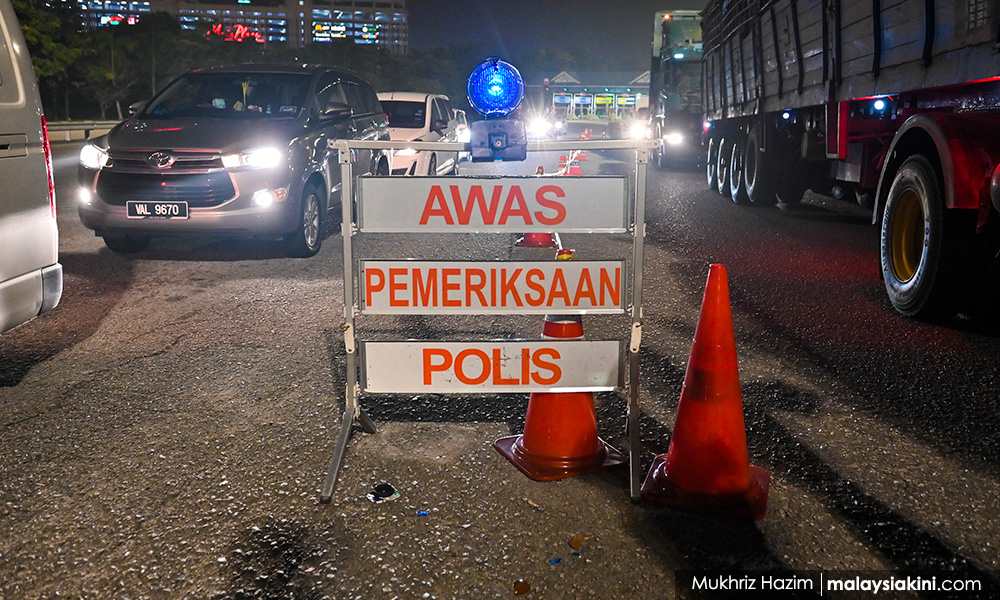
Would possession of one stick of cigarette justify the following actions:

  • They are subjected to being stopped, searched, and their conveyance seized;

  • They, including girls, are subjected to the embarrassment of body searches;

  • They are subjected to enforcement officers entering their premises by force;

  • Their baggage, packages, and containers may be opened and examined;

  • Access to information and data in their computers and devices are to be provided including password, encryption code, and decryption code for software or hardware.

Secondly, penalties for the offences are another problem. If the penalties are too light, they will be ignored and the law will be ineffective and fall into disrepute.

If they are too heavy, they will be disproportionate to the offence. This is already shown by the amendments to the GEG Bill in the reduction of fines from RM5,000 to RM500.

Thirdly, the GEG Bill is punishing the smallest actors (the foot soldiers) in the war against tobacco use by imposing disproportionately hefty fines and heavy imprisonment terms on them.

The punishment for those who sell tobacco products to the 2007 Generation is a fine not exceeding RM20,000 or imprisonment for one year or both.

For the second offence, the fine is RM30,000 and imprisonment for 2 years or both.

For body corporate, the fine is not less than RM20,000 and not exceeding RM100,000 or two years imprisonment or both.

For a second offence, the fine is not less than RM150,000 and not exceeding RM300,000 or three years imprisonment.

It appears that the drafters of the GEG Bill may not have realised that those selling tobacco products are not the big tobacco companies.

Those selling are the retailers. Those at the bottom of the supply chain, eking out a modest living to make ends meet.

The bill drafters are shooting the cigarette vendors in the five footways, the mama and papa grocery shops, the mamak stallholders, and coffee shop operators.

For the big tobacco companies, it will be business as usual: manufacturing, importing, and distributing tobacco products because it is still a legal business to supply the 2006 Generation.

This is impure paternalism. The class of person being interfered with is the entire retail end of the industry which is numerically far larger than the few 2007 cohort smokers.

The GEG Bill does not meet the proportionality requirements.

3. Efficacy

Paternalistic intervention can only be justifiable if there is a reasonable prospect that it will be effective in terms of immediate results and improving the capacity of the individuals to act autonomously over the longer term.

Another important consideration is whether the intervention may make matters worse.

The GEG Bill is of doubtful efficacy for the following reasons:

  • The prohibition and criminalisation will lead to increased illicit markets and the smuggling of tobacco products. The tobacco industry may be taken over by an unregulated black market supervised by criminals, such as happened during the alcohol prohibition in the United States from 1920 to 1933 under the Volstead Act;

  • The generation ban will likely be ineffective since the supply of tobacco products are still legally available to the earlier generation of smokers;

  • There is no scientific or other reliable evidence on the effectiveness of the GEG;

  • There is a danger that the law will fall into disrepute. Prohibitions create opportunities for corruption that all in Malaysia are unfortunately well familiar with.

Importance of requirements for Paternalistic Laws

The GEG Bill is not the first and will not be the last paternalistic policy that the government will be called upon to enact.

There will be increasing calls for paternalistic laws as more scientific evidence and greater knowledge become available of the costs to individuals and society of certain forms of personal behaviour such as gambling, consumption of unhealthy food, and alcohol abuse, as with smoking tobacco.

There are already frequent and loud calls for paternalistic laws in our multiracial and multi-religious society to prohibit various personal behaviour, consumption of certain foods, manner of dressing, activities, forms of entertainment, and festivals.
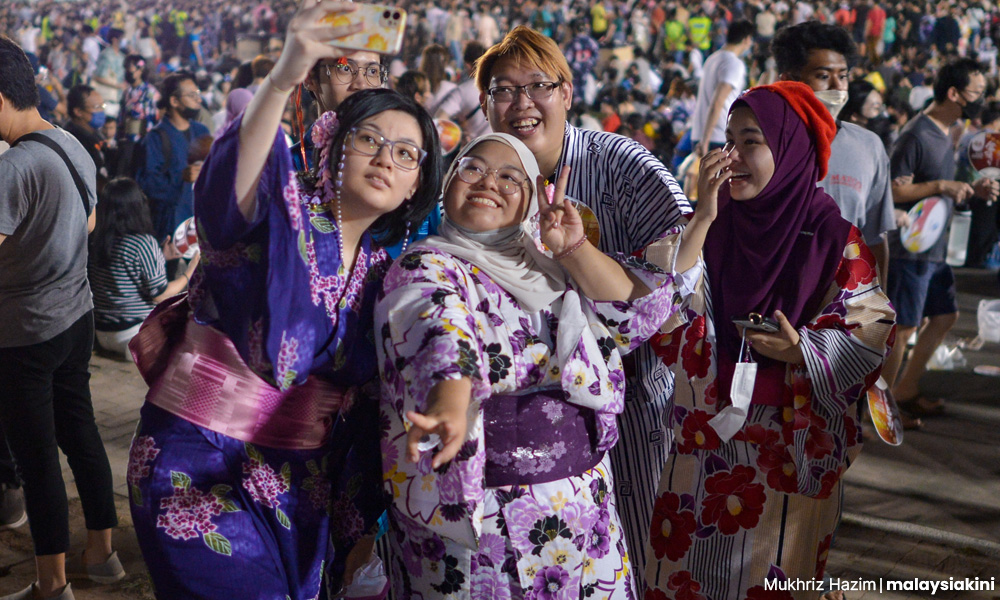
The Bon Odori festival came under the spotlight after Religious Affairs Minister Idris Ahmad told Muslims not to attend.

It is important that the GEG Bill satisfies the threshold requirements for justifiable paternalism.

Otherwise, the lowering of threshold requirements will open the floodgates to calls for the prohibition of various behaviour that interferes with the privacy and autonomy of diverse groups.

These are not justifiable paternalistic policies but they will try to slip through under the guise of public health.

Conclusion

As the WHO director-general said in a keynote address at the International Conference on Public Health Priorities in the 21st Century: The Endgame for Tobacco on Sept 11, 2013:

“If all the harms caused by tobacco were known earlier on, tobacco products would never have been marketed and sold like any other consumer product.”

In considering proposals to correct this grievous mistake, the WHO DG offered the following advice on Tobacco End Games:

“Fourth, recognize the diversity of factors that drive the tobacco epidemic in different economic and cultural contexts. These contexts also create their own unique barriers to success.

“A diversity of endgame strategies, as opposed to a single global strategy might be needed to accommodate these different contexts. The provision of a menu of strategic and policy options might be another wise way forward.

“Fifth, be realistic.”

It is hoped that both the health minister and the PSC take into consideration our unique Malaysian economic and cultural contexts when reviewing the GEG Bill.

The minister and the PSC ought to accept the WHO DG’s advice to look at a menu of strategic options that may be more realistic and achievable than the arbitrary banning of a generation from tobacco use.


WILLIAM LEONG JEE KEEN is the Selayang MP.

The views expressed here are those of the author/contributor and do not necessarily represent the views of Malaysiakini.

View Comments
You Might Also Like
ADS


Generation End Game: Threshold Requirements for Justifiable Paternalism

Control of Tobacco Product and Smoking Bill 2022


The Generation End Game

Most policies ratified under the World Health Organization Framework Convention on Tobacco Control (“WHO FCTC”) relates to regulatory control to reduce tobacco use. In recent years, there is a shift from reduction of tobacco use to proposals for eradication of tobacco use for a smoke-free world (“Tobacco End Game”).[1] Among the more radical proposals was one from Singapore - ‘the Tobacco Free Generation 2000’ that would deny tobacco supply to any citizen born on or after a certain date (in that case 1 January 2000) (“the Generation End Game”)[2] Since then, Singapore, Tasmania, (Australia), Guernsey (UK), Finland, New Zealand and now Malaysia have proposed Generation End Game laws.

DR 29/2022 The GEG Bill

On 2 August 2022, Parliament debated DR 29/2022, Control of Tobacco Product and Smoking Bill 2022, commonly referred to as the Generation End Game Bill (“the GEG Bill”). The GEG Bill proposes the criminalization of buying, using and possession of tobacco products for those born on 1st January 2007 and after (“the 2007 Generation”). The criminal prohibition applies not only during their teens but continues into their adulthood. The prohibition applies to the day they die even if they live to be a hundred. For this generation, the choice to smoke or to quit the habit is abrogated permanently.

The GEG Bill is not only about criminalization of tobacco use but also the infantilization of adults of this 2007 Generation.  The government treats them as incapable of making rational decisions to look after their own health, thus the government like a good parent makes the decision for them. Fair-minded people will find this absurd and unacceptable.

On the other hand, those born one day earlier, 31st December 2006 and before (“the 2006 Generation”) can buy, use, possess and smoke to their hearts’ content until their dying day without restrictions, penalties, or molestation. They retain their moral autonomy to smoke or to quit the habit.

Since there is no valid reason for the different treatment of the two generations, this is an arbitrary age discrimination.   

Means as Important as Ends

I do not smoke. I do not want my children or their generation to smoke.

I also want a smoke-free world. However, for me, the means is as important as the ends. Freedom from state harassment is equally valued as public health. If the use of the state’s coercive powers to prohibit a generation from smoking cannot be justified, the fall-out will set back public acceptance for more practical and less radical Tobacco End Game strategies.

Saving Lives

Health Minister, Khairy Jamaluddin’s rallying cry for the GEG Bill is “Let’s save some lives.” This must be weighed against the harsh reality that the GEG Bill is taking away their liberty and their freedom to choose. They are subjected to a lifetime of living in fear of prosecution, state harassment in being stopped and searched, extortion, loss of privacy and the stigma of a criminal record for smoking.

Their lives may be saved but are they any longer having a life worth living? Is it acceptable for those in this 2007 Generation, who do not even smoke, to be subjected to the same risk of harassment as those who do? Who made MPs - “Gods”- with powers to condemn a whole generation to a lifetime of misery and fear?

For the reasons stated in this article, I welcome the GEG Bill being referred to the Parliament Select Committee (“PSC”) for review. It is hoped that the PSC can rework the GEG Bill to meet the threshold requirements for justifiable paternalism or else consider alternative Tobacco End Game strategies.

Paternalism

The idea that governments may use its coercive powers to change personal behaviour of individuals without their consent is called paternalism. Paternalism offends a fundamental principle of democratic society – the individual is the best judge of his or her own personal behaviour.[3] The individual must be able to exercise his or her freedom of choice to cultivate and develop moral autonomy. Where government intervenes in people’s lives, taking away their ability to make their own choices, it undermines their ability to learn from their mistakes, to develop as morally responsible citizens and to acquire the ability to responsibly manage risks. It inevitably leads to dependence on government and diminishes self-reliance.

The Harm Principle

The only exception to the principle of freedom of choice for allowing paternalistic policies is to prevent harm to other people. This is John Stuart Mill’s “harm principle” enunciated in his treatise “On Liberty.” According to Mill when people are considered incompetent or incapable of making decisions in their own interest, the harm principle permits paternalistic intervention. For many scholars and philosophers, the harm principle is the only legitimate ground for paternalistic intervention by the State.

Health Minister Khairy Jamaluddin contends in his winding-up speech that the harm principle is satisfied. In response to his first contention on the harm to third parties by second hand smoke, this is addressed by confining smoking to restricted areas. His second contention the protection of the 2007 Generation from self-harm is tenuous. The Minister argues that the 2007 Generation is incapable of making a rational decision to stop smoking. He based this argument on the addictive nature of nicotine. This argument is not convincing for the following reasons:

a.      Nicotine addiction affects only those who smoke, the non-smokers in this 2007 Generation are not addicts. Therefore, there is no reason to hold that these non-smokers are incapable of making rational decisions;


b.      Many who smoked for years have been able to stop smoking on their own volition. Not by using nicotine replacement therapy or professional help. Just by the individual’s firm resolve;

The harm principle has not been satisfied.

Threshold Requirements for Justifiable Paternalism

The threshold requirements for evaluating paternalistic intervention are discrimination, proportionality and efficacy.

Unjustified Discrimination

The paternalistic policy should only apply to those at risk from the harm. The government must avoid interfering with the liberty of those not deemed to require protection.

There is no rational reason why those born on 1 January 2007 are criminally prohibited from using tobacco products while those born a day earlier can do so. The legal distinction has no public health basis and not supported by scientific evidence for the different treatment. Citizens once they have passed the age of consent should not be treated unequally.

Passing this discriminating law that targets those who presently cannot vote is not a legitimate way of making laws. If there is to be a Generation End Game then this decision should be made by the 2007 Generation when they come of age because they are the ones affected. Those who suffer no consequences have no business to impose sanctions on those who come after them.

The GEG Bill is bad on the ground of age discrimination.    

Proportionality

Paternalistic intervention must be the minimum necessary to achieve the effect of protecting those who are the subject of the policy. Paternalistic intervention must be proportionate to the problem being addressed. This is not the case for the GEG Bill.

Firstly, the enforcement powers in the GEG Bill in respect of buying, use and possession of tobacco products is disproportionate to the avowed objective of saving the 2007 Generation. Would possession of one stick of cigarette justify the following actions[4]:

a)      They are subjected to being stopped, searched and their conveyance seized;

b)     They, including girls, are subjected to the embarrassment of body searches;

c)      They are subjected to enforcement officers entering into their premises by force;

d)     Their baggage, packages and containers may be opened and examined;

e)     Access to information and data in their computers and devices are to be provided including password, encryption code, decryption code for software or hardware;

Secondly, penalties for the offences are another problem.  If the penalties are too light, they will be ignored and the law will be ineffective and fall into disrepute. If the they are too heavy, they will be disproportionate to the offence. This is already shown by the amendments to the GEG Bill in the reduction of fines from RM5,000.00 to RM500.00.[5]

Thirdly, the GEG Bill is punishing the smallest actors (the foot soldiers) in the war against tobacco use by imposing disproportionately hefty fines and heavy imprisonment terms on them.

The punishment for those who sell tobacco products to the 2007 Generation is a fine not exceeding RM20,000 or imprisonment for one year or both.

For the second offence the fine is RM30,000 and imprisonment for 2 years or both.

For body corporate the fine is not less than RM20,000.00 and not exceeding RM100,000 or 2 years imprisonment or both.

For second offence the fine is not less than RM150,000.00 and not exceeding RM300,000.00 or 3 years imprisonment.

It appears that the drafters of the GEG Bill may not have realized that those selling the tobacco products are not the big tobacco companies. Those selling are the retailers. Those at the bottom of the supply chain, eking out a modest living to make ends meet.

The drafters are shooting the cigarette vendors plying their trade at the five footways, the mama and papa grocery shops, the mamak stallholders and coffee shop operators. For the big tobacco companies, it will be business as usual: manufacturing, importing and distributing tobacco products because it is still a legal business to supply the 2006 Generation. This is impure paternalism. The class of person being interfered with is the entire retail end of the industry which are numerically far larger than the few 2007 cohort smokers.     

The GEG Bill does not meet the proportionality requirements.     

Efficacy

Paternalistic intervention can only be justifiable if there is a reasonable prospect that it will be effective in terms of immediate results and improving the capacity of the individuals to act autonomously over the longer term. Another important consideration is whether the intervention may make matters worse.

The GEG Bill is of doubtful efficacy for the following reasons:

a)      The prohibition and criminalization will lead to increased illicit market and smuggling of tobacco products. The tobacco industry may be taken over by an unregulated black market supervised by criminals, such as happened during the alcohol prohibition in the United States from 1920 to 1933 under the Volstead Act;


b)     The generation ban will likely be ineffective since the supply of tobacco products are still legally available to the earlier generation of smokers;


c)      There is no scientific or other reliable evidence on the effectiveness of the GEG;


d)     There is a danger that the law will fall into disrepute. Prohibitions create opportunities for corruption that all in Malaysia are unfortunately well familiar with;     

Importance of satisfying threshold requirements for Paternalistic Laws

The GEG Bill is not the first and will not be the last paternalistic policy that the government will be called upon to enact. There will be increasing calls for paternalistic laws as more scientific evidence and greater knowledge become available of the costs to individuals and society of certain forms of personal behaviour such as: gambling, consumption of unhealthy food, alcohol abuse as with smoking tobacco.

There are already frequent and loud calls for paternalistic laws in our multiracial and multi-religious society to prohibit various personal behaviour, consumption of certain foods, manner of dressing, activities, forms of entertainment and festivals. It is important that the GEG Bill satisfies the threshold requirements for justifiable paternalism. Otherwise, the lowering of threshold requirements will open the floodgates to calls for the prohibition of various behaviour that interferes with the privacy and autonomy of diverse groups. These are not justifiable paternalistic policies but they will try to slip through under the guise of public health.   

Conclusion

As the WHO Director-General said in the keynote address at the International Conference on Public Health Priorities in the 21st Century: The Endgame for Tobacco on 11 September 2013[6]:

“If all the harms caused by tobacco were known earlier on, tobacco products would never have been marketed and sold like any other consumer product.”

In considering proposals to correct this grievous mistake, the WHO Director-General offered the following advice on Tobacco End Games:

“… Fourth, recognize the diversity of factors that drive the tobacco epidemic in different economic and cultural contexts. These contexts also create their own unique barriers to success. A diversity of endgame strategies, as opposed to a single global strategy might be needed to accommodate these different contexts. Provision of a menu of strategic and policy options might be another wise way forward.

Fifth, be realistic.”

It is hoped that both the Health Minister and the PSC take into consideration our unique Malaysia economic and cultural contexts when reviewing the GEG Bill. The Minister and the PSC ought to accept the WHO-Director’s advice to look at a menu of strategic options that may be more realistic and achievable that the arbitrary banning of a generation from tobacco use.

William JK Leong

Member of Parliament Selayang

6th August 2022


[1] Human Rights and the Ethical Considerations for a Tobacco-free Generation file:///C:/Users/USER/Downloads/tobaccocontrol-2013-051125.pdf


[2] Khoo D, Chiam Y, Ng P, Phasing-out tobacco: Proposal to deny access to tobacco for those born from 2000 Tob Control 2010: 19: 355-60  https://pubmed.ncbi.nlm.nih.gov/20876075/

[3] Paternalism in social policy when is it justifiable – Parliament of Australia https://www.aph.gov.au/About_Parliament/Parliamentary_Departments/Parliamentary_Library/pubs/rp/rp1011/11rp08

[4] Part IX Sections 25 -40 GEG Bill

[5] Amendment in Committee to GEG Bill

[6] WHO Director-General considers the tobacco end game. Keynote Address 11 September 2013 https://www.who.int/director-general/speeches/detail/who-director-general-considers-the-tobacco-endgame


Saturday, July 3, 2021


Article by William Leong Jee Keen

28 June 2021


Get Out of the Way

                                                              “Lead, follow, or get out of the way”

-       Thomas Paine

Ending the COVID-19 Pandemic

Malaysians are demanding an end to the COVID-19 pandemic and that is what they deserve. However, this is not going to happen with a government putting its political interest before pandemic containment and lacking people’s trust in government.  

Incapable to lead, unreliable as followers, this PN government ought to heed Thomas Paine’s words – get out of the way.

Buying time with other people’s lives

This government’s incompetence in dealing with the pandemic is clear when compared to the PH government.

When the first wave of the pandemic hit Malaysia on 25 January 2020, PH was able to contain the total number of positive cases to 22 by 16 February 2020 with no deaths. There were zero daily positive cases reported for 11 days from 16 to 27 February 2020.

Since the PN government took over, the number of positive cases reached a record high of 9,020 positive cases on 29 May 2021. By 5 June 2021, the average daily positive cases reached 7,434. By 25 June 2021, the total number of infections stand at 722,659 with 60,117 active cases. The national death toll has reached 4,803 with 2,007 people having died in the month of June 2021 amounting to 41.8%. On average 80 people died from COVID-19 daily or 3.3 deaths per hour.

Politics before containment

The PN government has put its political interest above the pandemic containment at every important turn of events.

Malaysia, under the PH government, was on track to be declared COVID-19 free. But political ambitions have no patience. They made the Sheraton Move on 24 February. There was no government until 1st March and no health minister until 10 March. During this time, the Tabligh cluster spread with 2,000 positive cases reported throughout the country. By 10 April, the second wave of the pandemic reached 4,346 positive cases and 70 deaths.

The third wave of the pandemic was again caused by political ambitions in seeking to take over the Warisan-led Sabah state government through defections. An estimated 2,979 cases amounting to 70% of the cases in Sabah and 1,741 cases amounting to 64.4% outside Sabah were attributed to infections contracted during the Sabah state election.

Half-way compromises do not work

Political interest is also reflected in the containment strategy chosen by the PN government. Those governments willing to take the full blow of the political and economic hits of harsh restrictions under an aggressive containment strategy, are now reaping the benefits. For countries such as China, South Korea and New Zealand, restrictions have been lifted, lives have returned to normal and economies flourishing.

Malaysia is proof that half-way compromises do not work. With an eye on a probable snap election to cure its lack of legitimacy, harsh restrictions would have affected its election chances. Appeasing economic demands from the full effect of public health requirements dragged out the pandemic for all. The result, an increased death toll and a flailing economy.

No light at end of tunnel under PN

By using a public health emergency as an excuse to suspend parliament, pandemic containment was sacrificed on the altar of political power. The absence of parliament scrutiny, oversight and due process affected the legitimacy of the rules and regulations. It also affected the government’s integrity and credibility.

Whatever remaining credibility was eroded by the Prime Minister’s response to the King. No one buys that a committee study is required for parliament to sit. Everyone knows it is really the lack of intestinal fortitude to face a motion of no confidence.

For so long the PN leadership view any measure to end the pandemic affects their political interest, such measure will not see light at the end of the parliament tunnel.

Lack of Legitimacy and Trust in government

Combating COVID-19 requires extreme measures and restrictions in the freedom of movement, association and earning a living. Such measures impose restrictions in nearly every aspect of social and economic live. Coercion by police, heavy fines and imprisonment cannot achieve the level of compliance necessary to deal with the pandemic. It can only succeed through voluntary compliance. This is through legitimacy and trust in government. Legitimacy and trust in government are the reasons citizens pay their taxes voluntarily knowing it is not to the immediate personal benefit of the individual taxpayer but is done for the greater good of the country. It is the reason citizens stop at red traffic lights with no policeman in sight. Compliance with government policy comes from being perceived as acceptable and credible, that the rules and regulations are for the benefit of the greater good and applies equally to all.

No reservoirs of support

Legitimacy is described as a reservoir of goodwill and support that allows the government to secure the citizens compliance with the rules and regulations without resort to coercion.

Legitimacy is based on moral authority. Legitimate power must be earned not grabbed. Trust means holding a positive perception of an individual or organization. It is a subjective phenomenon reflected in the eyes of the beholder.

In the eyes of PH voters, grabbing power by defections and joining the opposition were heinous betrayals. The PN government has not earned and never enjoyed the trust of PH voters. With UMNO declaring the parting of ways with Bersatu in the next election, it lost the trust of the BN voters.

Bersatu on its own therefore, does not have the level of goodwill and support required to secure voluntary compliance with the rules and regulations This is because the reservoirs of support belong to PH and BN.

Doing right and fair

Trust represents the confidence of citizens in government actions to do what is right and perceived as fair. Trust in government encompasses values such as reliability, integrity, responsiveness, fairness, openness and above all competence.

When citizens feel they have been unfairly treated they will have less trust in government and become less willing to comply with rules and regulations. Conversely, when citizens feel they are fairly treated, they are willing to incur personal cost for the greater good provided they feel confident that others are doing the same.

Perception of fair process leads to greater acceptance and better compliance with rules and regulations. When perceived procedural justice elements are built into the design and administration of a regulation, this regulation will in fact work better and is easier to enforce.

Low level of trust in government leads to low rates of compliance with rules and regulations. Lack of trust in government cause great harm to society and damage the government’s capacity to act. Worse, an increasing decline in trust leads to less willingness by citizens and businesses to obey the law and to make the sacrifices required during the crisis.

Incompetence and unfairness

There have been confusions galore, U-turns, and double standards in the implementation and enforcement of the standard operating procedures, rules and regulations. The police and municipal councils gave different interpretations from the executive government. Businesses did not know which Ministry was responsible for approving permissions to operate. Neither did the Ministers themselves with each giving their own set of guidelines and approvals.

Double standards in enforcement of the SOPs gave rise to feeling of unfairness and discrimination. Individuals and businesses were issued summons with fines of RM10,000.00 and RM50,000 respectively and those who violated quarantine were imprisoned. Ministers on the other hand were released or fined a mere RM1,000.00.

The resulting performance due to the inconsistent, confusing, conflicting policies and SOPs by the different ministers can be described in one word – incompetence.     

In the circumstances, the lack of trust and lack of legitimacy have resulted in low levels of compliance and exponential increase in the number of positive cases and deaths.

There is no indication this decline in trust in government can be reversed any time soon. With the country going into the most important phase to combat the virus – vaccination, Trust in government is crucial from approval of the vaccines, procurement of the vaccines, distribution and implementation of the vaccination programme. The whole of government and the whole of society recognize the vaccination campaign of this magnitude is unprecedent, the people’s trust in government is essential to the success of the vaccination programme. This government has been running around “in the emperor’s clothes.” It has no legitimacy and there is no trust in government. We cannot wait for a child to call out the ugly naked truth for us. The whole of society must act to ensure the vaccination programme not only succeeds but is also completed quickly.

False Faces

Macbeth in order to hide his evil plan to kill King Duncan to take over the Scottish throne, said: “False face must hide what the false heart doth know.”

Malaysians may have been deceived by the false faces before the Sheraton Move but they will not be deceived further. The instability of this government is inherent in the nature of the partners to the power grab. A Chinese saying is applicable:

“You cannot cover the sky with only one palm of your hand.”

Bersatu with only five members of parliament elected in GE14 together with the ten PKR defectors cannot even form a government, much less a stable one. Clinging on to power is a futile exercise. Each hour, 3.3 persons die and many more are financially ruined.

The PN government must get out of the way. If not all the waters in the Straits of Malacca cannot wash clean the blood from their hands.               

28 June 2021

William Leong Jee Keen

MP Selayang