Sunday, March 26, 2023

IMPUNITY TO COMMIT GRAND CORRUPTION IS NOT AN OPTION


        Like Prometheus who was bound to a rock and punished by an eagle eating his liver                alive each day, to have his liver grow back during the night and the ordeal repeated the             next day, Malaysians suffered daily from the evils of corruption. 

 IMPUNITY TO COMMIT GRAND CORRUPTION IS NOT AN OPTION


 Impunity to Commit Grand Corruption is Not an Option

I wish to make three comments to Datuk A. Kadir Jasin’s Facebook post as reported in the media on 19 March 2023. The veteran newsman in his posting advised Prime Minister Datuk Seri Anwar Ibrahim to “move on” from the past and dedicate himself to resolve the economic problems faced by the people.

First: Corruption and Impunity

Kadir Jasin wrote: “We have to bury our hatchets, heal the wounds and move on… It’s alright to seek justice. But in politics, especially one that’s vile as in Malaysia today, the line separating justice and revenge is blurry. So, let us leave the search for justice and truth to the law-enforcement agencies and the courts of law.”

Politics of Revenge and Selective Accountability

Politics of revenge, selective accountability, witch-hunts, political prosecution, trumped-up charges and show trials as a strategy to take-down political foes are as equally damaging to society and abominable as interference with the agencies, prosecutors and judiciary to stop investigations, prosecutions or to release crony wrong-doers.

However, criminal charges or allegations of corruption in show trials are typically weak and the evidence produced unconvincing. Whether by bringing in and out a mattress into court or a chart of illicit funds flow, the court of public opinion will pass judgment whether putting the former leaders on trial is for accountability or a political ploy.

Political Will and Leadership

Abhorrent fraudulent prosecutions of political rivals must, however, be distinguished from a prime minister providing the leadership and political will necessary to carry out reforms to address corruption.

Political will and leadership is needed for: political governance, policies to prevent political interference in the appointment, promotion, transfer and removal of the enforcement agencies’ personnel, policies on public procurement, enhancing the independence of the judiciary and enforcement agencies, separating the Attorney-General’s functions as legal advisor to the executive and prosecution, the placement of MACC under the parliament, establishing parliament select committees for oversight and monitoring of the MACC and many other reforms.

Ending Impunity

Prime Minister Anwar Ibrahim has put into the forefront of his mission, the need to show the political will and leadership that Malaysia requires to rid the scourge of corruption – to end Impunity.

Impunity is the failure to prosecute those who have committed corruption, to allow the perpetrators to avoid accountability for their actions and victims to obtain justice for the wrongs they suffered.

“Impunity” is defined by the United Nations Set of Principles for the Protection and Promotion of Human Rights Through Action to Combat Impunity as follows: “The impossibility, de jure or de facto, of bringing the perpetrators of violations to account - whether in criminal, civil, administrative or disciplinary proceedings – since they are not subject to any inquiry that might lead to their being accused, arrested, tried and, if found guilty, sentenced to appropriate penalties, and to making reparations to their victims.”

There are currently joint international efforts to address impunity in corruption cases under the auspices of the United Nations Anti-Corruption Convention which Malaysia has ratified. One proposal is to establish an International Court on Corruption to prosecute corruption cases where the relevant nation states are unwilling or unable to prosecute grand corruption of their nationals. If, we are to forgo holding perpetrators of grand corruption accountable, it will indeed be a national embarrassment, for Malaysians to depend on other countries to secure justice for their own people.

Burying the Hatchet

Is this the time to bury the hatchet? Life for ordinary Malaysians in the past 60 years was not a stroll in the park. Malaysians are not digging up old wounds for revenge. Each day for the past six decades, ordinary Malaysians have been savaged by corruption. Like Prometheus who was bound to a rock and punished by an eagle eating his liver alive each day, to have his liver grow back during the night and the ordeal repeated the next day, Malaysians suffered daily from the evils of corruption. The wounds are fresh. The cries for justice and reparations warranted.

Malaysia has enough laws, agencies and plans to deal with corruption but all failed. This is because grand corruption is committed by those holding high-level political power and their business associates. They stole from the people. They stymied investigations, interfered with prosecutions and the judiciary. They entrenched their political power to maintain an environment where corruption flourished with impunity.

Finally, we have a regime change. At last, we can now bring the perpetrators to book. Justice can be served. Therefore, before we can bury the hatchet; truth, justice, retribution and compensation have to be given their hard-won place. 

The Prime Minister must not waver in his conviction to get rid of Impunity.

Second: Political Divisiveness

Kadir Jasin told Anwar “not to get caught in a time warp, fighting against your own shadows.” The demons of grand corruption in Malaysia are not imagined. They are real and they are pushing back to regain their political power. These demons must first be exorcised before victory over corruption can be attained. 

Kadir Jasin’s suggestion not to focus on prosecuting former political leaders is not without grounds. However, it is not in the best long-term interest of the nation. Prosecuting current or past political leaders tend to be divisive and destabilizing because they are chosen by the nation’s citizens or their parties to lead. They are obviously popular and sometimes revered. So criminal proceedings against them are inevitably perceived as political and become divisive. By adhering to the due process of the law, claims of political prosecution cannot be substantiated or extinguished until the evidence unfolds at the trial.  

Thus, notwithstanding its destabilizing nature, if corruption is to be wiped out, there must be the courage of conviction to choose prosecution over political expediency. History has shown this hard choice is preferred to allowing perpetrators breaking the law with impunity.     

In 1974, US President Gerald Ford pardoned Richard Nixon, his predecessor, despite clear evidence of wrongdoing in the Watergate scandal. Ford believed healing the nation from divisiveness was preferred to the destabilizing effects of punishing an ex-president. Others have viewed this as a historic mistake. It has emboldened future impunity of the kind Donal Trump is currently accused of.

Sarkozy is France’s second modern president to be found guilty of corruption, after Jacques Chirac in 2011 for kickbacks and an attempt to bribe a magistrate. The country did not fall apart after either conviction.

South Korea investigated and convicted five former presidents and in 2018 impeached President Park Geun-hye. South Korea also convicted and imprisoned her predecessor, Lee Myung-bak. Although large chaebols pose significant difficulties as illicit business behaviour is still common among them, public outrage against corrupt practices and demands for accountability have ensured grand corruption in South Korea is no longer tolerated.

On the other side of the spectrum, Mexico’s ruling Institutional Revolution Party or PRI established a system of patronage and corruption. Impunity kept Mexico stable during its transition to democracy in the 1990s by placating PRI members’ fear of prosecution after they leave office. But government corruption flourished and so did organized crime.

On 24 December 2017, the former President of Peru, Pedro Pablo Kuczynski, pardoned jailed ex-president Alberto Fujimori. Protestors accused Kuczynski of corruption, claiming that the pardon was payback for the support of Fujimori’s son, Kenji Fujimori in helping Kuczynski survive an impeachment vote, days earlier. On 3 October 2018, Fujimori’s pardon was reversed by Peru’s Supreme Court and he was ordered to return to prison.  

In several Latin American countries, tacit agreement by the successor government to maintain impunity by not prosecuting its predecessors established a system that permitted parties to “handover” illicit networks when one party replaces the other. Once elites come to an understanding that sanctions and prosecutions are de-coupled from regime change, then it is easy to imagine that political friends and foes will be perversely incentivized to engage in corruption. The changes of regime did not end corruption. It is only when this impunity circle is broken that one corrupt president after another, like dominos, begin to fall will corruption be arrested.

Therefore, if one is sincere in ending corruption there is no option other than to end impunity.

Third: Corruption and Economic Growth

Kadir Jasin advised Anwar not to continue speaking of his struggles and “help the people today to put food on their table.” However, there can be no food if corruption continues to thrive. Corruption reduces economic growth: diminishes innovative strategies, discourage foreign and local investment, increase the price of goods and services, increase state expenditures and reduce state revenues.

The National Anti-Corruption Plan 2019-2023 formulated in line with Article 5 of the United Nation Convention Against Corruption states that rampant corruption in politics and government have aggravated inequality in terms of income, wealth and opportunity. The real impacts of corruption include rising costs of living, declining purchasing power, dampened effects on wages and productivity. The situation is made worse by the increase in public debt to RM One Trillion which includes substantial debts arising from corruption and in leakages due to mis-governance of public funds. The Government has paid 1MDB’s debts of RM43.8 billion with a balance of RM9.7 billion unpaid. More than RM1.8 Trillion has been lost through illicit financial flow from 2005 until 2014 of which a portion is corruption related. There was the BMF scandal, PKFZ, Scorpion submarines scandal, now Jana Wibawa.

Conclusion

In order for the Prime Minister to address the economic needs of Malaysians, focus and priority must be given to end corruption. Putting an end to impunity is not revenge but for the social economic well-being of Malaysians,

William Leong Jee Keen

Member of Parliament Selayang

24 March 2023


Tuesday, August 9, 2022


NU
ADS
mk-logo
COLUMNS
MP SPEAKS | Smoking end game: Govt intervening, personal consent

MP SPEAKS | Most policies ratified under the World Health Organization Framework Convention on Tobacco Control (WHO FCTC) relate to regulatory control to reduce tobacco use.

In recent years, there is a shift from the reduction of tobacco use to proposals for the eradication of tobacco use for a smoke-free world (Tobacco End Game).

Among the more radical proposals was one from Singapore - ‘the Tobacco Free Generation 2000’ that would deny tobacco supply to any citizen born on or after a certain date (in that case Jan 1, 2000) (the Generation End Game).

Since then, Singapore, Tasmania (Australia), Guernsey (UK), Finland, New Zealand, and now Malaysia have proposed Generation End Game laws.

On Aug 2, Parliament debated DR 29/2022, Control of Tobacco Product and Smoking Bill 2022, commonly referred to as the Generation End Game Bill (the GEG Bill).

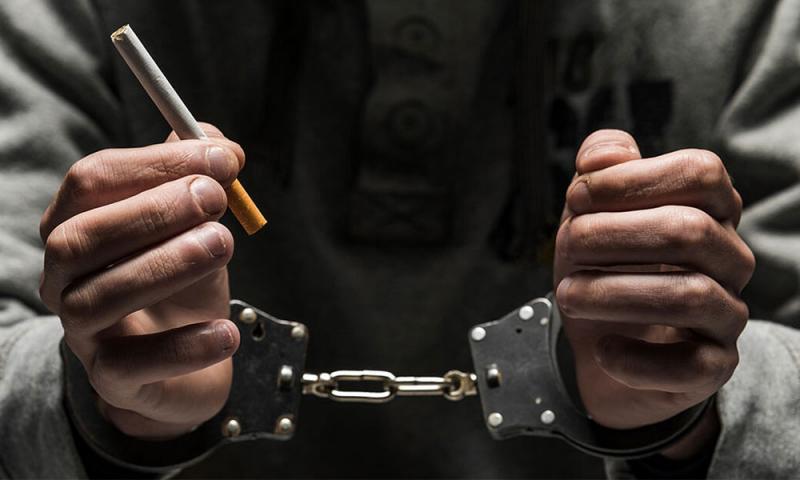
The GEG Bill proposes the criminalisation of buying, using, and possessing tobacco products for those born on Jan 1, 2007, and after (the 2007 Generation).

The criminal prohibition applies not only during their teens but continues into their adulthood and to the day they die even if they live to be a hundred. For this generation, the choice to smoke or to quit the habit is abrogated permanently.

The GEG Bill is not only about the criminalisation of tobacco use but also about the infantilisation of adults of this 2007 Generation.

ADS

The government treats them as incapable of making rational decisions to look after their own health, thus the government, like a good parent, makes the decision for them. Fair-minded people will find this absurd and unacceptable.

On the other hand, those born one day earlier, Dec 31, 2006, and before (the 2006 Generation) can buy, use, possess, and smoke to their hearts’ content until their dying day without restrictions, penalties, or molestation.

They retain their moral autonomy to smoke or quit the habit.

Since there is no valid reason for the different treatment of the two generations, this is arbitrary age discrimination.

Means as important as ends

I do not smoke. I do not want my children or their generation to smoke.

I also want a smoke-free world. However, for me, the means are as important as the ends. Freedom from state harassment is equally valued as public health.

If the use of the state’s coercive powers to prohibit a generation from smoking cannot be justified, the fall-out will set back public acceptance of more practical and less radical Tobacco End Game strategies.

ADS

Health Minister Khairy Jamaluddin’s rallying cry for the GEG Bill is “Let’s save some lives.” This must be weighed against the harsh reality that the GEG Bill is taking away their liberty and their freedom to choose.

They are subjected to a lifetime of living in fear of prosecution, state harassment in being stopped and searched, extortion, loss of privacy, and the stigma of a criminal record for smoking.

Their lives may be saved but are they any longer lives worth living? Is it acceptable for those in this 2007 Generation, who do not even smoke, to be subjected to the same risk of harassment as those who do?

Who made MPs “Gods” with powers to condemn a whole generation to a lifetime of misery and fear?

For the reasons stated in this article, I welcome the GEG Bill being referred to the Parliament Select Committee (PSC) for review.

It is hoped that the PSC can rework the GEG Bill to meet the threshold requirements for justifiable paternalism or else consider alternative Tobacco End Game strategies.

Paternalism

The idea that governments may use their coercive powers to change the personal behaviour of individuals without their consent is called paternalism.

Paternalism offends a fundamental principle of a democratic society – the individual is the best judge of his or her own personal behaviour.

The individual must be able to exercise his or her freedom of choice to cultivate and develop moral autonomy.

When the government intervenes in people’s lives, taking away their ability to make their own choices, it undermines their ability to learn from their mistakes, to develop as morally responsible citizens, and acquire the ability to responsibly manage risks.

It inevitably leads to dependence on government and diminishes self-reliance.

The Harm Principle

The only exception to the principle of freedom of choice for allowing paternalistic policies is to prevent harm to other people. This is John Stuart Mill’s “harm principle” enunciated in his treatise “On Liberty.”

According to him, when people are considered incompetent or incapable of making decisions in their own interest, the harm principle permits paternalistic intervention.

For many scholars and philosophers, the harm principle is the only legitimate ground for paternalistic intervention by the state.

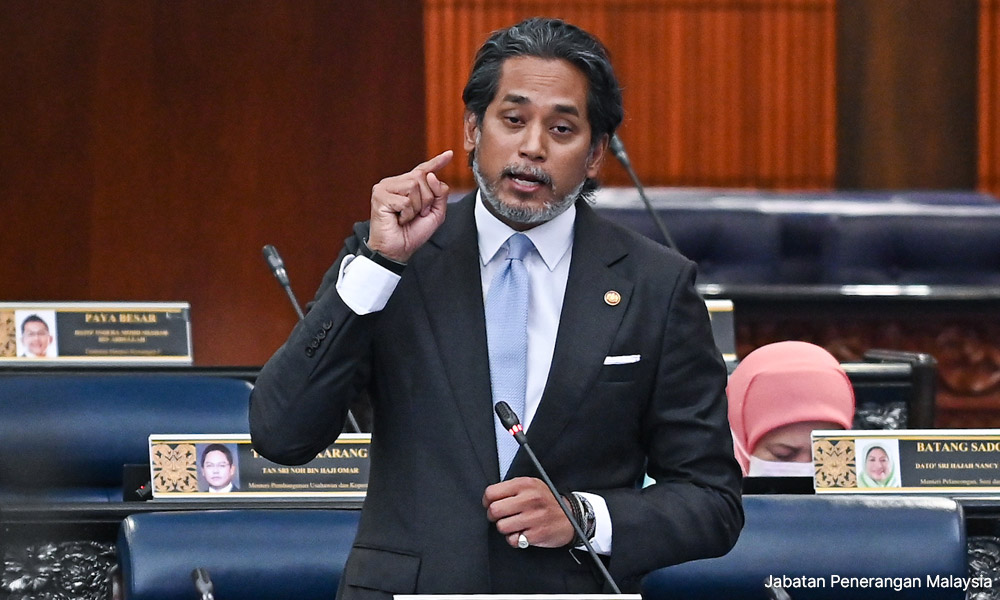
Health Minister Khairy Jamaluddin

Khairy contends that the harm principle is satisfied. In response to his first contention on the harm to third parties by second-hand smoke, this is addressed by confining smoking to restricted areas.

His second contention regarding the protection of the 2007 Generation from self-harm is tenuous.

The minister argues that the 2007 Generation is incapable of making a rational decision to stop smoking. He based this argument on the addictive nature of nicotine. This argument is not convincing for the following reasons:

  • Nicotine addiction affects only those who smoke, the non-smokers in this 2007 Generation are not addicts. Therefore, there is no reason to hold that these non-smokers are incapable of making rational decisions;

  • Many who smoked for years have been able to stop smoking of their own volition. Not by using nicotine replacement therapy or professional help. Just by the individual’s firm resolve.

The harm principle has not been satisfied.

Threshold requirements for justifiable paternalism

The threshold requirements for evaluating paternalistic intervention are discrimination, proportionality, and efficacy.

  1. Unjustified Discrimination

The paternalistic policy should only apply to those at risk of harm. The government must avoid interfering with the liberty of those not deemed to require protection.

There is no rational reason why those born on Jan 1, 2007 should be criminally prohibited from using tobacco products while those born a day earlier can do so.

The legal distinction has no public health basis and is not supported by scientific evidence for the different treatments. Citizens, once they have passed the age of consent, should not be treated unequally.

Passing this discriminating law that targets those who presently cannot vote is not a legitimate way of making laws.

If there is to be a Generation End Game then this decision should be made by the 2007 Generation when they come of age because they are the ones affected.

Those who suffer no consequences have no business imposing sanctions on those who come after them.

The GEG Bill is bad on the ground of age discrimination.

2. Proportionality

Paternalistic intervention must protect those who are the subject of the policy. Paternalistic intervention must be proportionate to the problem being addressed. This is not the case for the GEG Bill.

Firstly, the enforcement powers in the GEG Bill in respect of buying, using, and possessing tobacco products are disproportionate to the avowed objective of saving the 2007 Generation.

Would possession of one stick of cigarette justify the following actions:

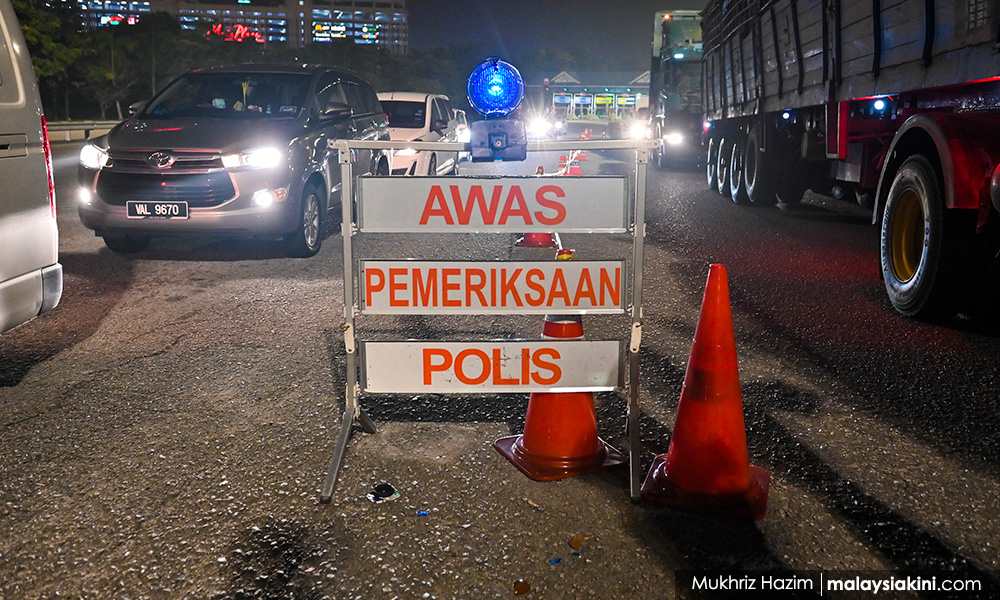
  • They are subjected to being stopped, searched, and their conveyance seized;

  • They, including girls, are subjected to the embarrassment of body searches;

  • They are subjected to enforcement officers entering their premises by force;

  • Their baggage, packages, and containers may be opened and examined;

  • Access to information and data in their computers and devices are to be provided including password, encryption code, and decryption code for software or hardware.

Secondly, penalties for the offences are another problem. If the penalties are too light, they will be ignored and the law will be ineffective and fall into disrepute.

If they are too heavy, they will be disproportionate to the offence. This is already shown by the amendments to the GEG Bill in the reduction of fines from RM5,000 to RM500.

Thirdly, the GEG Bill is punishing the smallest actors (the foot soldiers) in the war against tobacco use by imposing disproportionately hefty fines and heavy imprisonment terms on them.

The punishment for those who sell tobacco products to the 2007 Generation is a fine not exceeding RM20,000 or imprisonment for one year or both.

For the second offence, the fine is RM30,000 and imprisonment for 2 years or both.

For body corporate, the fine is not less than RM20,000 and not exceeding RM100,000 or two years imprisonment or both.

For a second offence, the fine is not less than RM150,000 and not exceeding RM300,000 or three years imprisonment.

It appears that the drafters of the GEG Bill may not have realised that those selling tobacco products are not the big tobacco companies.

Those selling are the retailers. Those at the bottom of the supply chain, eking out a modest living to make ends meet.

The bill drafters are shooting the cigarette vendors in the five footways, the mama and papa grocery shops, the mamak stallholders, and coffee shop operators.

For the big tobacco companies, it will be business as usual: manufacturing, importing, and distributing tobacco products because it is still a legal business to supply the 2006 Generation.

This is impure paternalism. The class of person being interfered with is the entire retail end of the industry which is numerically far larger than the few 2007 cohort smokers.

The GEG Bill does not meet the proportionality requirements.

3. Efficacy

Paternalistic intervention can only be justifiable if there is a reasonable prospect that it will be effective in terms of immediate results and improving the capacity of the individuals to act autonomously over the longer term.

Another important consideration is whether the intervention may make matters worse.

The GEG Bill is of doubtful efficacy for the following reasons:

  • The prohibition and criminalisation will lead to increased illicit markets and the smuggling of tobacco products. The tobacco industry may be taken over by an unregulated black market supervised by criminals, such as happened during the alcohol prohibition in the United States from 1920 to 1933 under the Volstead Act;

  • The generation ban will likely be ineffective since the supply of tobacco products are still legally available to the earlier generation of smokers;

  • There is no scientific or other reliable evidence on the effectiveness of the GEG;

  • There is a danger that the law will fall into disrepute. Prohibitions create opportunities for corruption that all in Malaysia are unfortunately well familiar with.

Importance of requirements for Paternalistic Laws

The GEG Bill is not the first and will not be the last paternalistic policy that the government will be called upon to enact.

There will be increasing calls for paternalistic laws as more scientific evidence and greater knowledge become available of the costs to individuals and society of certain forms of personal behaviour such as gambling, consumption of unhealthy food, and alcohol abuse, as with smoking tobacco.

There are already frequent and loud calls for paternalistic laws in our multiracial and multi-religious society to prohibit various personal behaviour, consumption of certain foods, manner of dressing, activities, forms of entertainment, and festivals.

The Bon Odori festival came under the spotlight after Religious Affairs Minister Idris Ahmad told Muslims not to attend.

It is important that the GEG Bill satisfies the threshold requirements for justifiable paternalism.

Otherwise, the lowering of threshold requirements will open the floodgates to calls for the prohibition of various behaviour that interferes with the privacy and autonomy of diverse groups.

These are not justifiable paternalistic policies but they will try to slip through under the guise of public health.

Conclusion

As the WHO director-general said in a keynote address at the International Conference on Public Health Priorities in the 21st Century: The Endgame for Tobacco on Sept 11, 2013:

“If all the harms caused by tobacco were known earlier on, tobacco products would never have been marketed and sold like any other consumer product.”

In considering proposals to correct this grievous mistake, the WHO DG offered the following advice on Tobacco End Games:

“Fourth, recognize the diversity of factors that drive the tobacco epidemic in different economic and cultural contexts. These contexts also create their own unique barriers to success.

“A diversity of endgame strategies, as opposed to a single global strategy might be needed to accommodate these different contexts. The provision of a menu of strategic and policy options might be another wise way forward.

“Fifth, be realistic.”

It is hoped that both the health minister and the PSC take into consideration our unique Malaysian economic and cultural contexts when reviewing the GEG Bill.

The minister and the PSC ought to accept the WHO DG’s advice to look at a menu of strategic options that may be more realistic and achievable than the arbitrary banning of a generation from tobacco use.


WILLIAM LEONG JEE KEEN is the Selayang MP.

The views expressed here are those of the author/contributor and do not necessarily represent the views of Malaysiakini.

View Comments
You Might Also Like
ADS